Introduction
A pen rolls off your desk mid-call. Papers slide behind the monitor. Business cards scatter across the surface the moment you open the drawer. For most office workers, this isn't a hypothetical scenario—it's Tuesday morning. And while you probably already own a desk organizer, chances are it's one of those lightweight plastic trays that shifts every time you grab a pen and now sports a fine network of stress cracks along the corners.
Bent metal desk organizers address this problem at the material level. Unlike injection-molded plastic units that flex, crack, and slide, precision-bent metal organizers use the inherent strength of steel to create structures that stay put, hold their shape under load, and survive years of daily use. What follows covers how they're made, what separates quality from cheap imitation, and how to choose one that actually solves desk chaos.
TLDR:
- Bent metal organizers are formed from single sheets of steel using precision press brakes, eliminating weak points from seams and joints
- Powder-coated steel outlasts plastic by 2x, resisting scratches and UV fading far better than painted finishes
- Heavy-gauge steel (18-20 gauge) provides stability—units don't slide when you grab items quickly
- Manufacturing quality hinges on tight bending tolerances and proper edge finishing; poor execution causes wobble and sharp edges
- OEM/ODM customization is available for bulk buyers and private-label brands through factory-direct manufacturers
What Is a Bent Metal Desk Organizer?
A bent metal desk organizer is a workspace storage product formed by precision-bending flat sheets of steel into functional shapes (trays, holders, channels, and compartments) rather than being molded from plastic or assembled from multiple parts. The defining characteristic is single-piece or minimal-join construction — enabled by the bending process itself — which creates structural integrity without screws, seams, or adhesive bonds that can fail over time.
Material Construction
Most bent metal organizers use one of three base materials:
- Heavy-gauge mild steel (18-20 gauge) - Standard for most commercial organizers; balances weight, rigidity, and cost
- Galvanized wire mesh - Welded wire grids bent into compartment structures; lighter and allows contents visibility
- Powder-coated steel - Mild steel with baked-on polymer finish for scratch resistance and color options
The material choice directly affects the organizer's weight and desk-grip stability. An 18-gauge steel document tray weighs enough to resist sliding when you grab paper from it quickly, a chronic frustration with lightweight plastic alternatives.
Why Single-Piece Construction Matters
When a desk organizer is formed from a single bent sheet rather than assembled from multiple components, every stress point is continuous metal rather than a glued joint or plastic weld. This means the organizer won't separate at connection points, which is where plastic units crack after months of use.
Why Metal Beats Plastic: Material Advantages That Matter
When procurement teams compare metal and plastic desk organizers, three factors drive the decision: how long the product lasts, what it looks like in the workspace, and what happens to it at end of life. Metal wins on all three.
Durability and Lifespan
Metal desk organizers handle heavy use without denting or bending, whereas plastic organizers crack and chip under the same conditions. While specific product lifespan data varies, lifecycle assessments of comparable durable goods show steel products last twice as long as plastic equivalents—10 years versus 5 years in industrial container applications. Using one metal organizer instead of two plastic replacements over a decade results in approximately 25% lower climate impact.
Real-world translation: A powder-coated steel paper tray loaded with 500 sheets won't warp or crack at the corners. The same load will stress-crack a plastic tray within 12-18 months.
Weight and Stability
Heavy-gauge steel provides desk-grip stability that lightweight plastic cannot match. When you grab a pen from a metal holder quickly, the unit stays put. Plastic organizers slide across the desk surface or tip forward—a small frustration that adds up over hundreds of daily interactions.
Gauge comparison:
- 20-gauge steel: 0.91mm thick, standard for commercial desk accessories
- 18-gauge steel: 1.21mm thick, used for heavy-duty organizers supporting binders and electronics
Aesthetics and Office Signaling
Metal finishes — matte powder coat, brushed steel, chrome — read as premium in ways plastic simply can't replicate. In corporate environments, facility design communicates company culture to clients and new hires. In home offices, workspace appearance shows up directly on video calls.
A mesh metal organizer communicates quality and permanence. That impression is difficult to achieve with plastic, and impossible once it starts cracking.
Sustainability Credentials
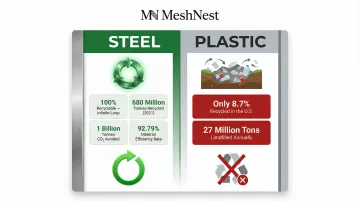
Steel is 100% recyclable without quality loss, making it a permanent material in the circular economy. In 2021, approximately 680 million tonnes of steel were recycled globally, avoiding over one billion tonnes of CO₂ emissions. The steel industry achieved a 92.79% material efficiency rate in 2024.
Contrast this with plastic office products: the U.S. recycling rate for plastics was just 8.7% in 2018, with 27 million tons sent to landfills that same year. Common plastics like ABS and polypropylene degrade with each reprocessing cycle, limiting their circular potential.
Tactile Quality
Rounded edges on bent metal communicate quality the moment you pick the product up. For bulk buyers, this tactile detail affects end-user satisfaction and perceived value — which directly influences repeat orders and return rates downstream.
How Bent Metal Desk Organizers Are Made
The manufacturing process defines quality. A well-made organizer sits flat, stacks cleanly, and holds its finish for years — and that comes down to what happens before it ever reaches a desk.
Sheet-Metal Bending Process
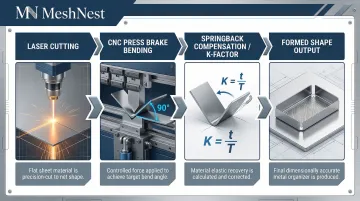
A flat sheet of steel is laser-cut to a precise blank, then bent at calculated angles using CNC press brakes. Modern brakes use "air bending," where the punch's depth into the die determines the final bend angle. This single operation defines the organizer's form with no assembly required.
Fabricators must account for "springback" — where metal returns slightly toward its flat state after bending force is removed. To correct for this, manufacturers calculate a K-factor representing the material's neutral axis shift during bending. Without that compensation, paper trays won't hold the intended slant and stacking trays won't align.
Tolerance Requirements
Tight tolerances ensure organizers sit flat without wobbling and modular components fit together seamlessly. General linear tolerances for sheet metal follow ISO 2768-m:
- ±0.10mm for dimensions between 0.5–6mm
- ±0.20mm for dimensions between 6–30mm
However, material inconsistencies complicate this. A mere ±0.006 inch variation in sheet thickness can cause up to 4 degrees of angular variation during bending — enough to make stacking trays misalign. Export-grade manufacturers like MeshNest build to ISO 9001:2015 standards, ensuring consistent gauge compliance across production runs.
Surface Finishing
After bending, edges are deburred and rounded — critical for both safety and tactile quality. The organizer is then powder-coated or electroplated.
Powder coating vs. liquid paint:
Powder coating outperforms traditional paint across every durability metric that matters for office use:
| Performance Metric | Powder Coating | Liquid Paint |
|---|---|---|
| Salt spray corrosion resistance | 500–1000+ hours | 200–500 hours |
| UV color retention | 1000–2000+ hours | 500–1000 hours |
| Impact resistance | 80–160 in-lbs | 40–80 in-lbs |
| Surface hardness | 2H–4H | H–2H |
There's an environmental case for it too. Powder coating contains no solvents and emits near-zero VOCs, with up to 95% transfer efficiency since overspray can be recaptured. Liquid paint achieves only 40–60% efficiency, with the remainder lost as hazardous waste.
Interior Lining
Where applicable, interior linings are added to protect contents and reduce noise. Each material serves a specific purpose:
- Cork — cushions pen tips and small accessories without scratching
- Felt — protects phone screens and soft surfaces from abrasion
- Rubber pads — prevent items from sliding and eliminate metal-on-metal clatter
It's a small addition that meaningfully changes how the organizer feels to use every day.
Types of Bent Metal Desk Organizers for Every Workspace Need
Paper Trays and Document Holders
Flat-bottomed or angled trays sized for A4/letter documents. Stackable designs let users separate "action now" from "file later" piles without papers spreading across the desk. Look for slanted fronts that keep paper edges aligned and visible. The weight of the metal base also prevents the tray from sliding when you pull a sheet out.
Pen and Pencil Holders
Upright cylinders or partial-channel holders bent to keep writing tools accessible. The best designs include a front horizontal lip or shallow recess where 1-2 frequently used pens rest separately from backup storage in the main compartment. That front lip keeps pens from rolling away when you set them down mid-call.
Business Card and Small-Item Trays
Shallow, angled trays where cards settle into a neat stack for easy thumb-lift retrieval. Also used for paper clips, USB drives, and similar miscellaneous items that otherwise migrate across the surface.
Wire Mesh Organizers and Multi-Compartment Units
Bent wire mesh panels formed into desktop caddies with multiple vertical and horizontal compartments. Key advantages of the open-grid format:
- Contents stay visible at a glance — nothing gets buried
- Lightweight construction without sacrificing structural strength
- Ideal for shared workstations where multiple people need quick access to supplies
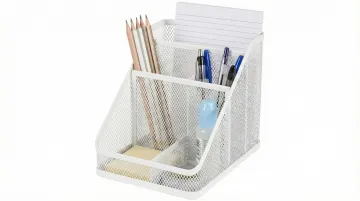
Wire mesh multi-compartment units form one of MeshNest's largest product categories, built from raw wire through to powder-coated finish in-house.
Modular and Stackable Sets
Families of organizers designed to share the same footprint, finishes, and proportions, allowing users to build a personalized desk system over time. Stackability is especially valued in compact desks and hot-desking environments where vertical space matters.
What to Look for When Buying a Bent Metal Desk Organizer
Gauge and Weight
Thicker gauge steel means a more stable, longer-lasting product. Standard gauges:
- 20-gauge (0.91mm): Adequate for pens, paper, and light files
- 18-gauge (1.21mm): Required for heavy binders and stacked folders
Avoid units that flex under light hand pressure. For bulk buyers, gauge compliance needs to be documented, not assumed — manufacturers like MeshNest build to ISO 9001:2015 standards with verified consistency across production runs.
Edge Treatment and Interior Finish
All exposed bends should be fully deburred and rounded. Run a finger along all corners before committing — if you feel sharpness, the finishing step was skipped or rushed.
Interior surfaces should have cork, felt, or rubber lining wherever stationery, binders, or paper goods will rest. This protects both the organizer and its contents.
For Bulk Buyers and Brand Owners
Look for OEM/ODM capability — the ability to customize dimensions, finishes, branding, and packaging. Factory-direct sourcing from vertically integrated manufacturers eliminates middlemen and gives consistent quality control from raw material to packaged unit.
MeshNest supplies retailers and brand partners sourcing at scale with full OEM/ODM support:
- Custom dimensions, finishes, logos, and retail packaging
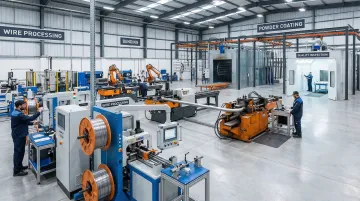
- Vertically integrated production from wire processing through powder coating
- Consistent output across large production runs with documented QC
- MOQ of 100–250 units — accessible for mid-sized brands and distributors
Frequently Asked Questions
Are bent metal desk organizers durable enough for daily office use?
Yes. Wire mesh and sheet metal organizers are built for long-term use, resist warping under load, and outlast plastic equivalents by a significant margin. Powder-coated finishes add protection against corrosion, scratches, and UV fading for years of daily handling.
What types of desk items can a bent metal organizer hold?
Pens, pencils, papers, business cards, scissors, tape, phones, chargers, and small accessories. Multi-compartment or stackable designs can consolidate an entire desk's contents into one cohesive system.
How do I clean and maintain a metal desk organizer?
Wipe down with a damp cloth and mild detergent. Avoid abrasive cleaners that scratch powder coating. Dry immediately to prevent moisture pooling under any coating chips. Replace interior liners (felt, cork) if worn.
Is a bent metal desk organizer better than a plastic one?
Metal offers advantages in durability, aesthetics, and recyclability. Plastic is lighter and cheaper upfront, but the total cost of ownership favors metal—you buy it once instead of replacing it every 18-24 months when the plastic cracks.
Can bent metal desk organizers be customized for a brand or retailer?
Yes—OEM/ODM manufacturers can customize size, finish, color, compartment layout, branding (logo etching or printing), and packaging. This makes private-label metal organizers accessible for brands and bulk buyers sourcing at wholesale volumes. To start a customization inquiry with MeshNest, reach out on WhatsApp at +91 98370 74236 or email hello@themeshnest.com.
What is the difference between a bent metal organizer and a wire mesh organizer?
Bent metal organizers are formed from solid sheet stock, while wire mesh units use a grid of welded wires shaped into compartments. Both are durable metal options, but mesh is lighter, allows contents visibility, and provides airflow—useful for preventing dust accumulation.
Final Thought: The global desk organizer market is projected to grow as hybrid work becomes permanent, with 557 million home office workers shaping product demand. Plastic holds 38-42% of the material market share—leaving clear room for metal alternatives that buyers choose once and keep for years. For procurement managers and brand owners, that durability advantage also doubles as a sustainability credential worth communicating to end customers.