Introduction
Procurement teams sourcing desk organizers at scale face a familiar frustration: finding a supplier who can actually deliver. The global B2B office supplies market is valued at $25.09 billion in 2026 and projected to reach $37.29 billion by 2035, growing at 4.5% annually. Within that growth, mesh desk organizers have become one of the strongest-performing categories — favored for their durability, contemporary design, and versatility across office, retail, and institutional settings.
The challenge isn't demand — it's sourcing. Bulk buyers consistently run into three friction points:
- Trading companies that add markup without adding manufacturing capability
- Suppliers who lack export documentation or compliance certifications like ISO 9001:2015 and SMETA
- Manufacturers who can't commit to consistent lead times or support OEM/ODM customization
Finding a factory-direct supplier who handles all of this under one roof remains difficult.
This guide walks through what bulk buyers need to evaluate: product types available at scale, supplier qualification criteria, customization options for OEM and ODM buyers, and realistic MOQ, pricing, and lead time expectations.
Key Takeaways
- Product range spans desktop organizers, file holders, tiered shelves, and monitor stands for corporate, institutional, and retail buyers
- Wholesale sourcing cuts costs, ensures supply consistency, and unlocks branding opportunities unavailable at retail
- Verify suppliers through ISO 9001:2015, SMETA, and Sedex certifications plus in-house manufacturing capability
- OEM/ODM options include logo branding, powder coat finishes, custom sizing, and retail-ready packaging
- MOQ, pricing, and lead times vary by complexity and volume; compare supplier quotes on FOB or CIF terms
Types of Mesh Desk Organizers Available for Bulk Purchase
Mesh desk organizers span multiple product categories, each serving distinct buyer segments and workspace needs.
Primary Product Categories:
- Multi-compartment desktop organizers — Combine file slots, pen holders, sticky note trays, and accessory compartments in one unit
- Single pen/pencil cups and caddies — Compact cylindrical holders for writing instruments
- File and magazine holders — Vertical or horizontal storage for documents, magazines, and catalogs
- Tiered desktop shelves — Stackable or fixed multi-level trays for paper sorting
- Monitor stands with organizer trays — Elevate screens while providing storage underneath
- Wall-mounted mesh pockets — Vertical organizers that free up desk space
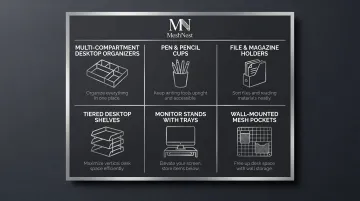
Material choice varies by buyer segment and end-use environment, which makes understanding finish options a practical starting point for wholesale sourcing.
Material Configurations and Finish Options
The most common material is powder-coated steel mesh, available in several finish variants:
- Black powder-coated steel mesh — The industry standard, offering a uniform matte finish that suits most office environments
- White epoxy-coated mesh — Popular in educational and healthcare settings
- Chrome-finished wire mesh — Premium look for executive offices
- Rose gold or colored finishes — Growing demand in e-commerce channels targeting home offices
Material choice directly impacts durability and price. Black powder-coated mesh typically sits at the lowest price tier, chrome and specialty finishes command 15-25% premiums, and custom color matching adds tooling costs.
Buyer Segments and Product Selection
Different product types serve specific buyer segments:
- Corporate procurement teams favor multi-compartment organizers and tiered shelves that standardize desk layouts across large offices
- Government and institutional buyers prioritize file holders and document sorters with high load capacity and sustainable sourcing certifications
- E-commerce retailers stock pen cups, small organizers, and modular stackable designs that photograph well and ship efficiently
- Supermarket chains source tiered organizers and monitor stands with retail-ready packaging
Design Trends Driving Bulk Demand
Current design trends driving bulk orders include:
- Minimalist all-black finishes that suit modern office aesthetics
- Ergonomic tiered layouts that improve document visibility
- Stackable and modular designs allowing customizable configurations
- Eco-friendly recyclable metal construction meeting sustainability procurement requirements
Product Specifications to Request
When sourcing mesh organizers wholesale, request these specifications:
- Wire gauge — Thicker wire (lower gauge numbers) increases durability and load capacity
- Mesh aperture size — Affects visibility, ventilation, and aesthetic
- Load-bearing capacity — Critical for file holders and monitor stands
- Surface finish durability — Scratch resistance, rust resistance, and finish longevity
- Packaging configuration — Units per carton, carton dimensions, and shipping weight for freight cost calculation
Why Source Mesh Desk Organizers in Bulk?
Cost Economics of Wholesale Purchasing
Factory-direct bulk orders eliminate distributor markups and reduce per-unit landed costs dramatically. Strategic procurement initiatives typically achieve 15-30% savings compared to business-as-usual purchasing, with procurement accounting for more than 20% of total financial impact in transformation programs.
Wholesale sourcing reduces costs through:
- Volume discounts — Per-unit price drops as order quantity increases
- Lower freight costs — Full container loads cost significantly less per unit than partial shipments
- Reduced administrative overhead — Fewer orders mean lower processing costs
Supply Chain Reliability
Bulk sourcing delivers predictable inventory and consistent lead times. Rather than placing monthly small orders with variable pricing, buyers negotiate quarterly or semi-annual commitments with fixed pricing and delivery schedules. Retail chains, supermarkets, and e-commerce resellers all benefit from that predictability — fewer stockouts, fewer emergency reorders, fewer pricing surprises.
Access to Customization
Once a supply relationship is established, bulk orders unlock customization options that simply aren't available to small-batch buyers:
- Private label branding with laser-engraved or printed logos
- Custom powder coat colors matched to your brand's exact color specs
- Retail-ready packaging — branded boxes, inserts, and shelf-ready presentation
- Bespoke sizing and design modifications for OEM requirements
For brand owners and OEM buyers, wholesale volume is what makes product differentiation possible — and economically sensible.
What to Look for in a Wholesale Mesh Desk Organizer Supplier
Manufacturer vs. Trading Company
When sourcing mesh desk organizers at scale, your first decision is whether to buy from a manufacturer or a trading company — and it shapes everything from pricing to customization control.
Manufacturer-direct sourcing offers:
- Better pricing transparency with no hidden intermediary markup
- Direct customization capability without third-party coordination
- Direct quality control with full access to production lines
- Faster communication and problem resolution
Operational signals that identify a true manufacturer:
- In-house production lines visible in factory photos or videos
- Raw material processing on-site (wire bending, cutting, welding)
- Dedicated R&D and design teams capable of custom development
- Owned testing equipment for quality validation
- Documented process control from material input to finished goods
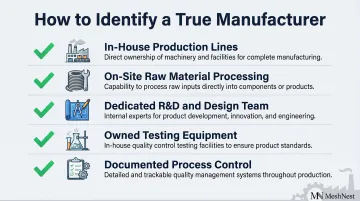
Trading companies may offer broader product variety, but manufacturers deliver better pricing and customization flexibility for buyers focused on mesh organizers specifically.
Quality Certifications and Compliance
International certifications validate supplier capability and reduce import risk. Require these certifications from any mesh organizer supplier:
ISO 9001:2015 — The globally recognized standard for quality management systems, covering planning, resource management, production, and continuous improvement. ISO 9001:2015 demonstrates that a supplier has documented quality processes and undergoes regular third-party audits.
SMETA (Sedex Members Ethical Trade Audit) — The world's most widely used social audit methodology, covering labor standards, health and safety, environment, and business ethics. SMETA audits are conducted by third-party firms like SGS, Intertek, and Bureau Veritas, validating ethical sourcing practices.
Sedex — A membership organization providing supply chain transparency and sustainability data. Sedex membership demonstrates commitment to responsible sourcing and ethical trade practices.
These certifications validate compliance with import requirements for the US, EU, and Middle East markets. While CE marking is not required for metal desk accessories in the EU, products must still comply with the General Product Safety Directive and REACH substance restrictions.
For example, MeshNest holds all three certifications (ISO 9001:2015, SMETA, and Sedex) and has exported to the US, EU, and Middle East from its 100,000 sq ft facility in Moradabad, India — making it straightforward to verify compliance before placing an order.
Export Track Record and Market Coverage
Evaluate suppliers based on:
- Export history to your target market: Regular shipments to the US, EU, or Middle East mean the supplier already understands region-specific documentation and customs requirements
- Years in operation: Newer suppliers may offer lower prices but carry higher fulfillment risk — look for at least 3-5 years of active exporting
- Annual export volume: Higher volume signals established freight relationships and the financial stability to honor large orders
Suppliers with multi-continent reach typically maintain dedicated documentation teams and freight forwarder networks — reducing your customs risk significantly.
Customization and OEM/ODM Options for Bulk Buyers
OEM vs. ODM Sourcing Models
Understanding the difference between OEM and ODM is critical for choosing the right sourcing approach:
OEM (Original Equipment Manufacturer): The buyer leads product design. The factory manufactures to the buyer's exact specifications, materials, and requirements. According to Importivity's OEM vs. ODM sourcing guide, OEM involves higher upfront costs for tooling, higher MOQs, and longer lead times — but the buyer owns the design IP and achieves full product differentiation.
ODM (Original Design Manufacturer): The supplier leads design using existing product templates. The buyer selects from existing designs and applies branding or makes minor modifications. ODM offers lower upfront costs, lower MOQs, and shorter lead times, but carries higher IP risk since the supplier may sell similar designs to other buyers.
Many brands launch with ODM to test buyer demand at lower cost, then graduate to OEM for product differentiation once demand is proven.
Typical Customization Options
Established mesh desk organizer manufacturers offer:
Branding:
- Laser engraving for permanent logo application
- Custom stickers or hang tags for cost-effective branding
- Branded packaging inserts and product cards
Finish and Color:
- Powder coat color variations matched to brand guidelines
- Custom mesh gauge and aperture sizes
- Surface treatment options (matte, gloss, textured)
Design Modifications:
- Bespoke sizing and dimension adjustments
- Compartment configuration changes
- Modular component variations
Packaging:
- Retail-ready custom boxes with brand graphics
- Gift packaging for premium positioning
- Protective packaging optimized for e-commerce fulfillment
In-House Customization Capability
MeshNest handles every stage of production in-house, from raw wire to finished packaging. The full manufacturing sequence covers eight steps:
- Material extraction and wire processing
- Bending and sleeving
- Stamping and welding
- Powder coating, assembly, and packaging
This vertical integration eliminates quality deviation risk from outsourced steps, supports faster turnaround, and gives buyers tighter cost control — with powder coating done on-site as a dedicated quality checkpoint before final assembly.
Steps to Initiate a Customization Request
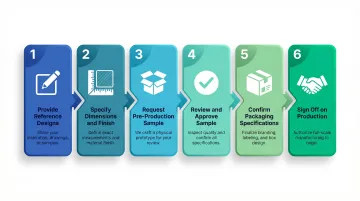
Follow this process for smooth OEM/ODM execution:
- Provide reference designs or sketches — Include photos, technical drawings, or competitor product examples
- Specify dimensions and finish — Detail measurements, powder coat color codes, and surface treatment requirements
- Request a pre-production sample — Review physical sample before committing to production
- Review and approve sample — Test functionality, measure dimensions, evaluate finish quality
- Confirm packaging specifications — Define carton configuration, protective materials, and branding elements
- Sign off on production — Authorize mass production only after sample approval
MOQ, Pricing, and Lead Time Expectations
Minimum Order Quantities
MOQ ranges vary between standard catalog products and customized orders:
- Standard catalog products: 100–250 units. Lower MOQs are possible when the factory already produces the item for other buyers and tooling exists.
- Customized or private label products: 250–500 units minimum, since the supplier must develop new tooling, create samples, and set up a dedicated production run.
Bulk Pricing Structure
Per-unit prices drop as order quantity increases — typically 10–15% when moving from MOQ to 2–3x MOQ, with further reductions at higher volumes.
Customization adds costs beyond the base unit price:
- Tooling and mold development for custom designs
- Pre-production sampling fees (sometimes credited against production orders)
- Special finish surcharges for non-standard powder coat colors
- Custom packaging setup fees for branded boxes
Always compare quotes on the same freight basis. Incoterms 2020 defines the three most common terms for international shipments:
| Term | Who Pays Freight & Insurance | Risk Transfers To Buyer |
|---|---|---|
| FOB | Buyer | At port of shipment |
| CIF | Seller (to destination port) | At port of shipment |
| EXW | Buyer (all costs) | At seller's premises |
Lead Time Expectations
Production timelines depend on order type:
Standard catalog products: 15–30 days from order confirmation and deposit, assuming materials are in stock.
Custom orders: 30–60 days or longer, factoring in:
Sample development and approval (7-14 days)
Tooling and mold creation for custom designs (10-20 days)
Mass production (15-30 days)
Quality inspection and packaging (3-7 days)
Factors affecting delivery schedules:
- Factory capacity — During peak production periods, lead times extend
- Order seasonality — Q3/Q4 sees peak demand for office supplies as businesses prepare for year-end and back-to-school, extending lead times industry-wide
- Freight booking windows — Container availability and sailing schedules add 2-6 weeks transit time depending on origin and destination ports
Confirm lead time commitments in writing before placing an order — reputable suppliers will document this as part of the purchase agreement, not just a verbal estimate.
Frequently Asked Questions
What is the typical MOQ for wholesale mesh desk organizers?
MOQ varies between standard catalog orders (100–250 units) and custom or private label orders (250–500+ units). Confirm MOQ directly with the manufacturer based on product type and customization level — suppliers with existing tooling can often accommodate lower minimums. To discuss your specific requirements with MeshNest, reach the team on WhatsApp at +91 98370 74236 or email hello@themeshnest.com.
Can mesh desk organizers be customized with a brand logo or specific colors?
Yes — most established manufacturers offer logo engraving, hang tags, powder coat color variations, and custom packaging. These options are typically available once orders meet the custom MOQ threshold, usually starting at 250 units or higher.
What materials are used in quality mesh desk organizers?
Quality mesh organizers use steel wire mesh with a powder coat or epoxy finish as standard. Wire gauge and surface treatment determine durability, weight capacity, and finish longevity — thicker wire and high-quality powder coating consistently deliver better performance.
How do I verify the quality of a bulk mesh desk organizer supplier?
Request pre-production samples, confirm certifications (ISO 9001:2015, SMETA, Sedex), and ask whether the supplier has documented in-house inspection standards. Factory visits or third-party audits provide the strongest verification.
What certifications should I look for when sourcing mesh organizers wholesale?
ISO 9001:2015, SMETA, and Sedex are the key certifications to request. For buyers importing into the US, EU, or Middle East, these documents are often required for customs clearance — confirm with your freight forwarder which certificates your specific trade lane needs.
What is the average lead time for a bulk order of mesh desk organizers?
Standard products typically ship within 15–30 days; custom orders run 30–60 days. Factor in freight transit time on top of production, and get lead time commitments documented in the purchase agreement before production begins.